

Product Description
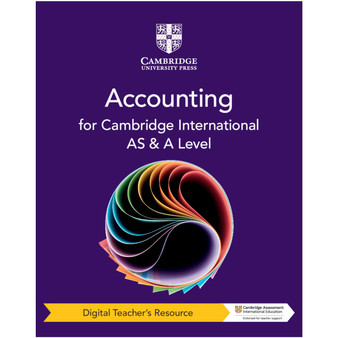
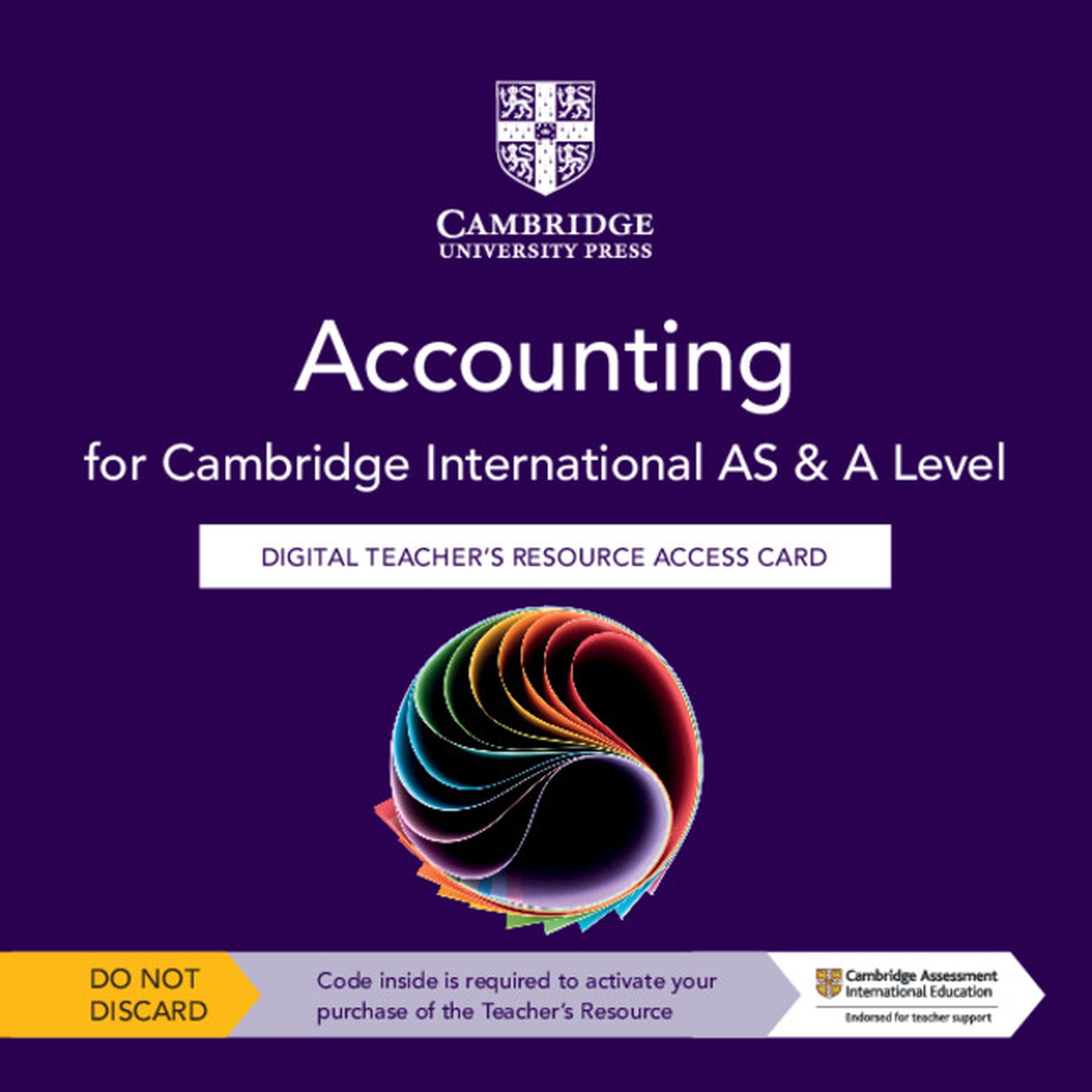
 DIGITAL - Cambridge International AS & A Level Accounting Digital Teacher's Resource Access Card
Format: Digital
Bring new ideas and inspiration into your Cambridge International AS & A Level Accounting classroom with our digital teacher’s resource. Our first edition for AS & A Level Accounting, this resource is filled with step-by-step lesson plans, differentiation and language advice, as well as downloadable materials, such as PowerPoint presentations and worksheets to save you valuable lesson planning time.
 Features:
-
A learning objectives box at the start of every lesson contains learning intentions and success criteria to ensure your lessons remain focussed
-
Step-by-step lesson ideas, including group activities, individual tasks and differentiation advice guide your teaching and bring new ideas into your lessons
-
Language support for English as a second language learners in every chapter ensures that language level isn’t a blocker to learning
-
Downloadable materials, such as PowerPoint presentations and topic worksheets, save lesson-planning time and can be used offline
-
Common misconceptions help address student misunderstandings and support every learner
-
Your digital teacher’s resource gives you access to everything you need - choose from editable Word files or PDFs to make lesson planning simple
-
Access all your Cambridge resources anytime, anywhere and create your own collection in ‘My Resources’
 Contents:
-
Introduction
-
About the authors
-
How to use this series
-
How to use this Teacher's Resource
-
Lesson plan template and exemplar
-
About the syllabus
-
About the examination
-
Approaches to teaching and learning
-
Teaching notes, supporting materials and answers
-
Part I The accounting system
-
Chapter 1: Double-entry bookkeeping: Cash transactions
-
Chapter 2: Double-entry bookkeeping: Credit transactions
-
Chapter 3: The books of prime entry
-
Chapter 4: Balancing accounts
-
Chapter 5: The classification of accounts and division of the ledger
-
Chapter 6: The trial balance
-
Part II Financial accounting
-
Chapter 7: Statements of profit or loss for sole traders
-
Chapter 8: Statements of financial position for sole traders
-
Chapter 9: Accounting concepts
-
Chapter 10: Accruals and prepayments (the matching concept)
-
Chapter 11: Accounting for the depreciation of non-current assets
-
Chapter 12: Irrecoverable debts
-
Chapter 13: Bank reconciliation statements
-
Chapter 14: Control accounts
-
Chapter 15: The correction of errors
-
Chapter 16: Introduction to incomplete records
-
Chapter 17: Incomplete records - further considerations
-
Chapter 18: Partnership accounts
-
Chapter 19: Partnership changes
-
Chapter 20: Manufacturing businesses
-
Chapter 21: An introduction to limited company accounts
-
Chapter 22: Limited companies – Further considerations
-
Chapter 23: Non-profit making organisations (clubs and societies)
-
Chapter 24: Statements of cash flows
-
Chapter 25: Auditing and stewardship
-
Chapter 26: International accounting standards
-
Chapter 27: Computerised accounting systems
-
Chapter 28: Business acquisition and merger
-
Chapter 29: Ethical considerations
-
Chapter 30: Accounting information for stakeholders
-
Chapter 31: Analysis and communication of accounting information
-
Part III: Cost and management accounting
-
Chapter 32: Costing of materials and labour
-
Chapter 33: Absorption costing
-
Chapter 34: Unit, job and batch costing
-
Chapter 35: Marginal costing
-
Chapter 36: Activity-based costing
-
Chapter 37: Budgeting and budgetary control
-
Chapter 38: Standard costing
For custom orders and quotes: shop@schoolspace.co.za
© 2026 Schoolspace. This product description is the exclusive intellectual property of the publisher, protected under copyright law. Unauthorized use, adaption, or copying is strictly prohibited.