

Product Description
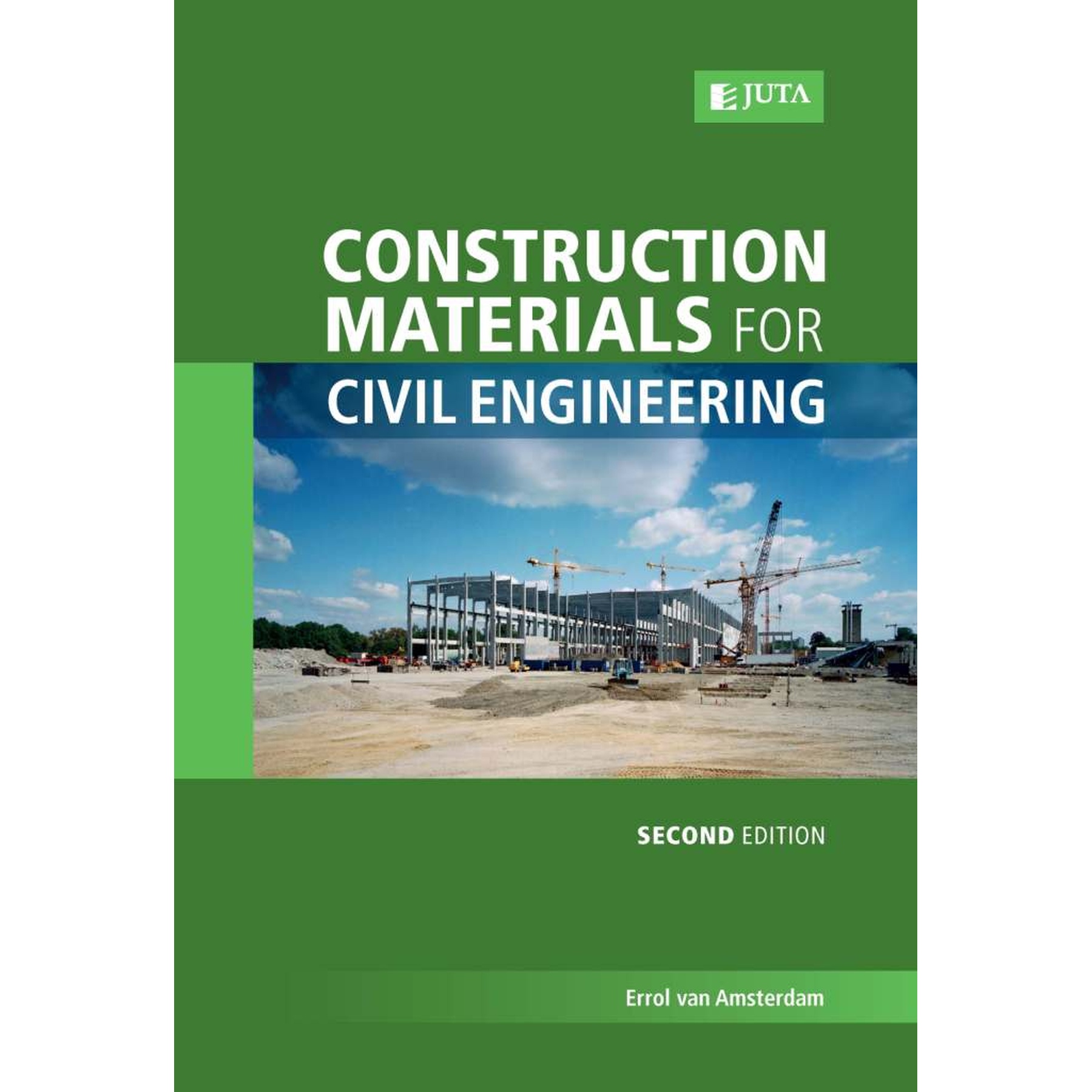
 Construction Materials for Civil Engineering (2nd edition) (WebPDF)
Author: E van Amsterdam
Format: Digital
Construction Materials for Civil Engineering Second Edition bridges the gap between school and university by providing practical examples and everyday concepts. These are applied to explain, in plain language, the fundamentals of civil engineering.
The book has been fully revised and includes a new chapter on internal building materials used.
Key Features
Clear language is used which aids in explaining technical terminology and concepts.
Fully worked examples are provided within each section.
Self-evaluation questions with answers are included in each section for immediate practice and feedback. The answers to the self-evaluation questions appear at the end of each chapter.
The process of constructing a house is used as a golden thread throughout the book, acting as an example, and demonstrating the practical application of civil engineering materials.
A methodology is used that is suitable for both contact and distance education.
 Contents:
-
Chapter 1 Soils
-
1.1 Introduction
-
1.2 Nature of soils
-
1.3 Identification of soil
-
1.4 Classification of soil
-
1.5 Soil survey procedure
-
1.6 Compaction
-
1.7 Quarries
-
1.8 Stabilisation
-
1.9 Slopes
-
1.10 Reinforced earth
-
1.11 Summary
-
Chapter 2 Concrete
-
2.1 Introduction
-
2.2 General concrete specifications
-
2.3 Materials for concrete
-
2.4 Mix proportions and quantities
-
2.5 Concrete mix design
-
2.6 Concrete production
-
2.7 Reinforcement
-
2.8 Joints
-
2.9 Precast concrete
-
2.10 Prestressed concrete
-
2.11 Concrete roads
-
2.12 Summary
-
Chapter 3 Bitumen
-
3.1 Introduction
-
3.2 Sources of bitumen
-
3.3 Bitumen and tar
-
3.4 The production of bitumen
-
3.5 The composition of bitumen
-
3.6 The behaviour and characteristics of bitumen
-
3.7 Types of bitumen
-
3.8 Sampling
-
3.9 Tests on bitumen
-
3.10 Applications of bitumen
-
3.11 Health and safety
-
3.12 Summary
-
Chapter 4 Structural materials: bricks, timber, steel and aluminium
-
4.1 Introduction
-
4.2 Bricks
-
4.3 Timber
-
4.4 Metal
-
4.5 Aluminium
-
4.6 Summary
-
Chapter 5 Environmental issues
-
5.1 Environmental engineering
-
5.2 The interdependence of conservation and development
-
5.3 Population figures
-
5.4 Soil erosion
-
5.5 Water pollution
-
5.6 Toxic waste
-
5.7 Air pollution
-
5.8 The balance between humans and nature
-
5.9 Sewage
-
5.10 Eutrophication
-
5.11 Summary
-
Chapter 6 Internal building construction materials used for finishes
-
6.1 Introduction
-
6.2 Floor coverings
-
6.3 Painting
-
6.4 Timber flooring
For custom orders and quotes: shop@schoolspace.co.za
© 2026 Schoolspace. This product description is the exclusive intellectual property of the publisher, protected under copyright law. Unauthorized use, adaption, or copying is strictly prohibited.