

Product Description
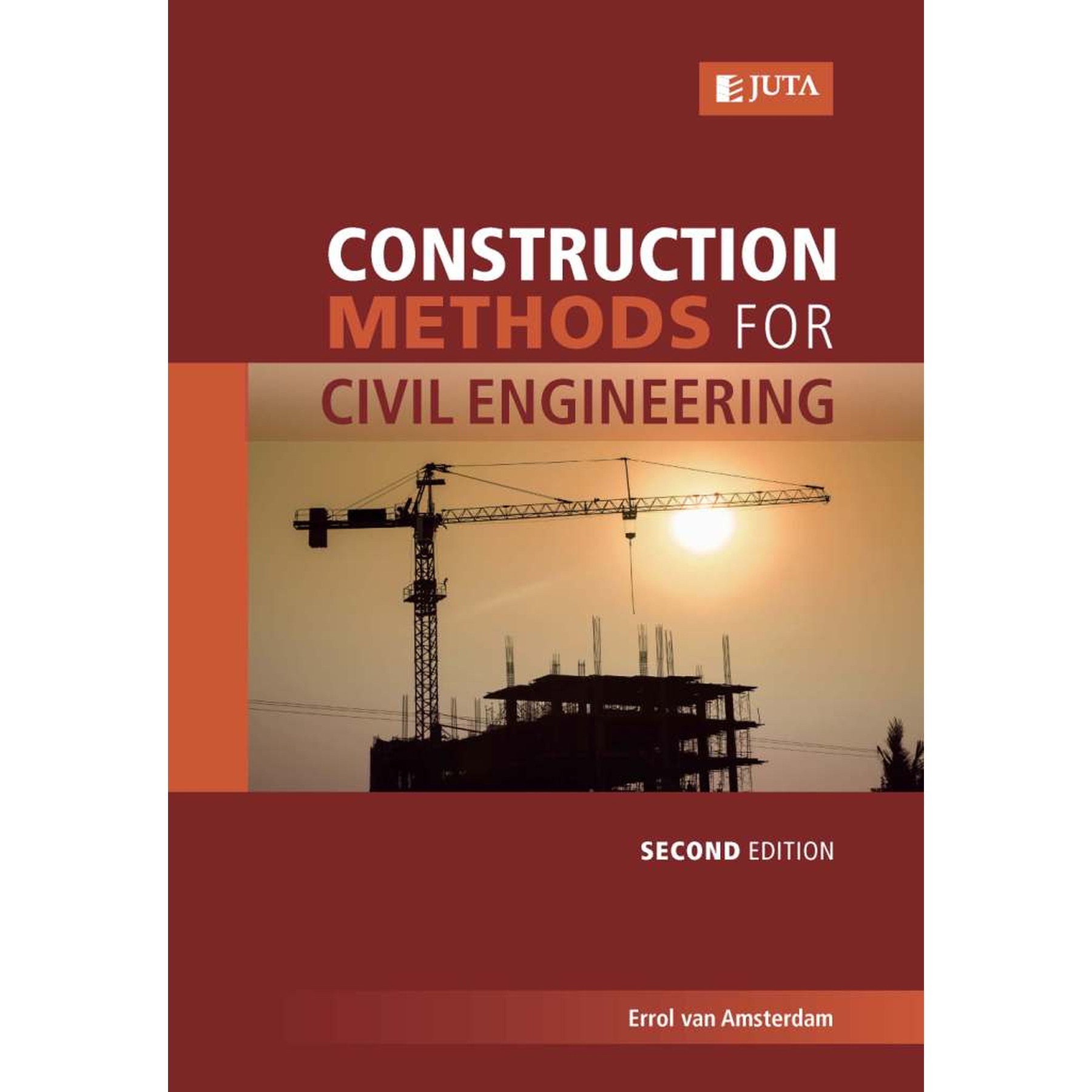
 Construction Methods for Civil Engineering (2nd edition)
Author: E van Amsterdam
Format: Physical Hardcopy
Construction Methods for Civil Engineering explains, in plain language, the fundamentals of civil engineering through practical examples and everyday concepts. It has in-depth explanations of various civil engineering concepts and acknowledges the major shift of focus towards Expanded Public Works Programmes and employment creation.
It encourages students to access virtual information through recommended websites and other sources of information. Civil engineering concepts are related to situations encountered in the field to enhance understanding of these concepts.
Key Features
Uses clear language which aids in explaining technical terminology and concepts
Assumes no prior knowledge of construction methods
Covers essential basic information
Includes self-evaluation questions with answers in each chapter for immediate practice and feedback
Uses a methodology that is suitable for both contact and distance education
 Contents:
-
CHAPTER 1 EARTHWORKS 1
-
1.1 Introduction
-
1.1.1 Site clearance
-
1.1.2 Setting out the site
-
1.2 Definitions
-
1.3 Foundations
-
1.4 Foundation types
-
1.5 Choosing foundation types
-
1.5.1 Determining the nature and bearing capacity of soil
-
1.6 Excavations
-
1.7 Timbering
-
1.8 Basic timbering excavation terminology
-
1.9 Trench excavation safety
-
1.9.1 Causes of collapses
-
1.10 Excavating basements
-
1.11 Retaining walls
-
1.12 Construction plant
-
1.13 Excavation plant
-
1.14 Earth-moving plant
-
1.15 Compaction plant
-
CHAPTER 2 STRUCTURES
-
2.1 Introduction
-
2.2 Structural forms
-
2.3 Structural steel forms
-
2.4 Precast concrete forms
-
2.5 Scaffolding
-
2.6 Formwork
-
2.7 Concrete placing and compaction
-
2.8 Brickwork bonding
-
2.9 Summary
-
CHAPTER 3 ROAD ENGINEERING
-
3.1 Introduction
-
3.2 Road terminology
-
3.4 Geometric design of roads
-
3.5 Pavement construction
-
3.6 Rigid concrete pavements
-
3.7 Road drainage
-
3.8 Accommodating services
-
CHAPTER 4 DAMS
-
4.1 Introduction
-
4.2 Definitions
-
4.3 The reason dams are built
-
4.4 Dam feasibility study
-
4.5 Dam types
-
4.6 Embankment (earth) dam design
-
4.7 Concrete dam design
-
4.8 Dam construction
-
4.9 Water conservation
-
4.10 Summary
-
CHAPTER 5 BRIDGES
-
5.1 Introduction
-
5.2 Types of bridges
-
5.3 Bridge design components
-
5.4 Criteria for designing a bridge
-
5.5 Bridge materials
-
5.6 Reinforced concrete vs structural steel
-
5.7 Prestressed concrete
-
5.8 Foundations
-
CHAPTER 6 TUNNELS
-
6.1 Introduction
-
6.2 Definitions
-
6.3 Tunnelling
-
6.4 Summary
-
CHAPTER 7 HARBOURS
-
7.1 Introduction
-
7.2 Definitions
-
7.3 Functions of a harbour
-
7.4 Types of harbours
-
7.5 Harbour structures and facilities
-
CHAPTER 8 RAILWAYS
-
8.1 Introduction
-
8.2 The permanent way
-
8.3 Definitions
-
8.4 Rails
-
8.5 Sleepers
-
8.6 Fastenings
-
8.7 Ballast
-
8.8 Formation
-
8.9 Turnouts and crossings
-
8.10 Grades
-
8.10.1 Grade requirements
-
8.11 Track maintenance
-
8.12 Summary
-
CHAPTER 9 AIRPORTS
-
9.1 Introduction
-
9.2 Definitions
-
9.3 Airport master plan
-
9.4 Airport structure
-
9.5 Pavement structure
-
9.6 Drainage
-
CHAPTER 10 SAFETY 202
-
10.1 Introduction
-
10.2 Machinery and Occupational Safety Act
-
10.3 Protective clothing
-
10.4 Workman’s Compensation Amendment Act 206
-
10.5 National Occupational Safety Association (NOSA)
-
CHAPTER 11 DRAINAGE
-
11.1 Introduction
-
11.2 Definitions
-
11.3 Drainage materials
-
11.4 Surface drainage (rain water)
-
11.5 Pipe and gutter sizing
-
11.6 Private sewers
-
11.7 Pipe connections
-
11.8 Soak-aways
-
11.9 Principles of good drainage
-
11.10 Sub-surface drainage
-
11.11 Channels
-
11.12 Culverts
-
11.13 Water supply and sewerage systems
-
11.14 Summary
-
CHAPTER 12 LABOUR-ENHANCED CONSTRUCTION (LEC)
-
12.1 Introduction
-
12.2 Labour-enhanced construction (LEC)
-
12.3 Summary
For custom orders and quotes: shop@schoolspace.co.za
© 2026 Schoolspace. This product description is the exclusive intellectual property of the publisher, protected under copyright law. Unauthorized use, adaption, or copying is strictly prohibited.