

Product Description
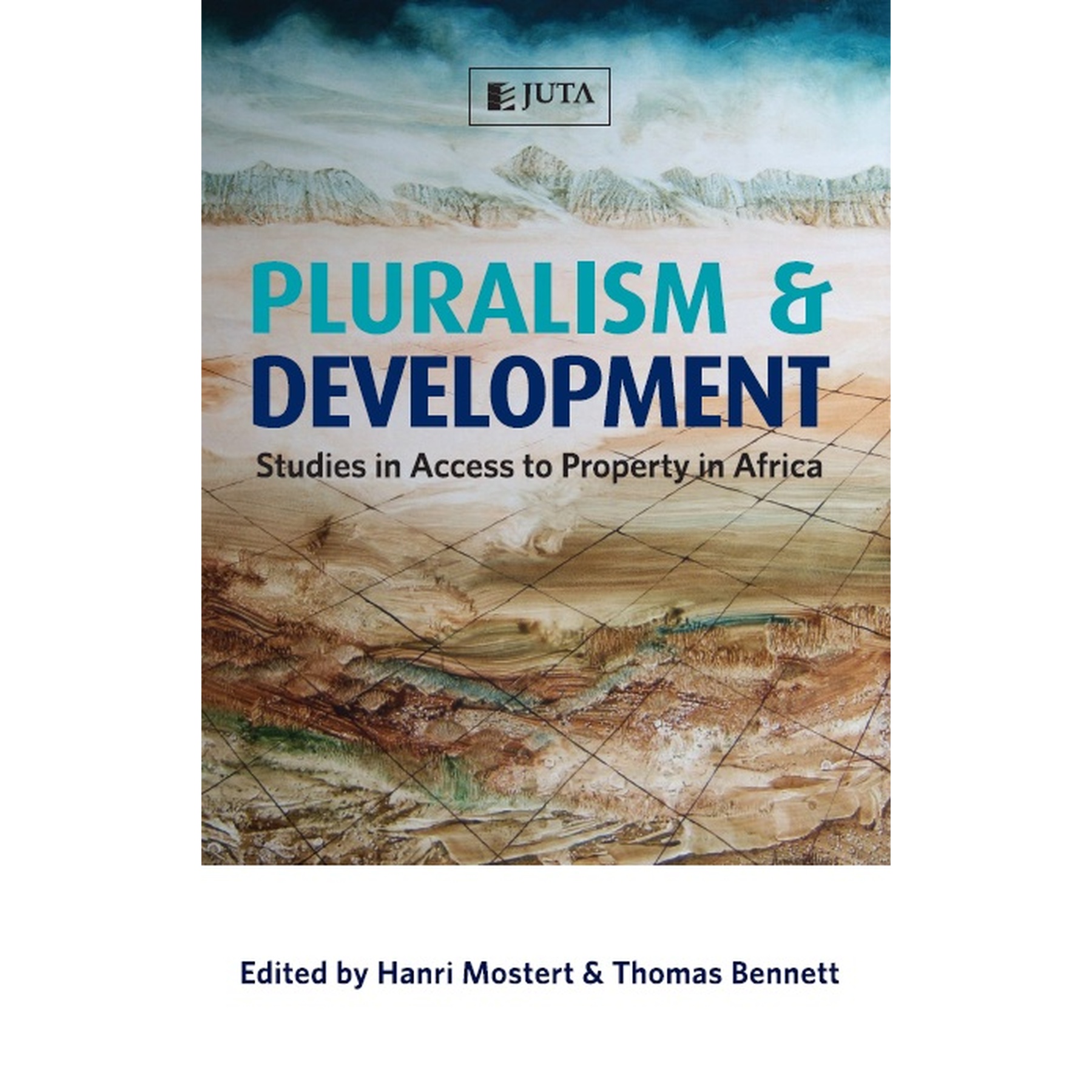
 Pluralism and Development (softcover)
Authors: TW Bennett, H Mostert
Format: Physical Hardcopy
This title comprises a collection of papers presented at a conference held at the University of Cape Town in 2010, which consider how development in Africa may best be achieved by concentrating on access to property from a pluralist perspective, with emphasis on land, the most important economic resource.
 Contents:
-
Access to property in Africa: An introductory survey - Thomas Bennett and Hanri Mostert
-
Absolute ownership and legal pluralism in Roman law: Two arguments - Helen Scott
-
Legal pluralism in Africa: The implications of state recognition of customary laws illustrated from the field of land law - Gordon Woodman
-
Legal pluralism and access to land in Nigeria - Enyinna Nwauche
-
The changing dynamics of customary land tenure: Women’s access to and control over land in Botswana - Anne Griffiths
-
Taking the gap – ‘Living law land grabbing’ in the context of customary succession laws in Southern Africa - Chuma Himonga
-
Securing women’s property inheritance in the context of plurality: Negotiations of law and authority in Mbuzini customary courts and beyond - Sindiso Mnisi Weeks
-
Contested power and apartheid tribal boundaries: The implications of ‘living customary law’ for indigenous accountability mechanisms - Aninka Claassens
-
Lost in translation: Family title in Fingo Village, Grahamstown, Eastern Cape - Rosalie Kingwill
-
Land information as a tool for effective land administration and development - Gerrit Pienaar
-
Legal pluralism – The investor’s view - Johann Schiller
-
Promises of future performance and informal-sector transfers of personal property: The example of Anglophone Cameroon - Claire Moore Dickerson
-
Indigenous-law land rights: Constitutional imperatives and proprietary paradoxes - Anne Pope
For custom orders and quotes: shop@schoolspace.co.za
© 2026 Schoolspace. This product description is the exclusive intellectual property of the publisher, protected under copyright law. Unauthorized use, adaption, or copying is strictly prohibited.