

Product Description
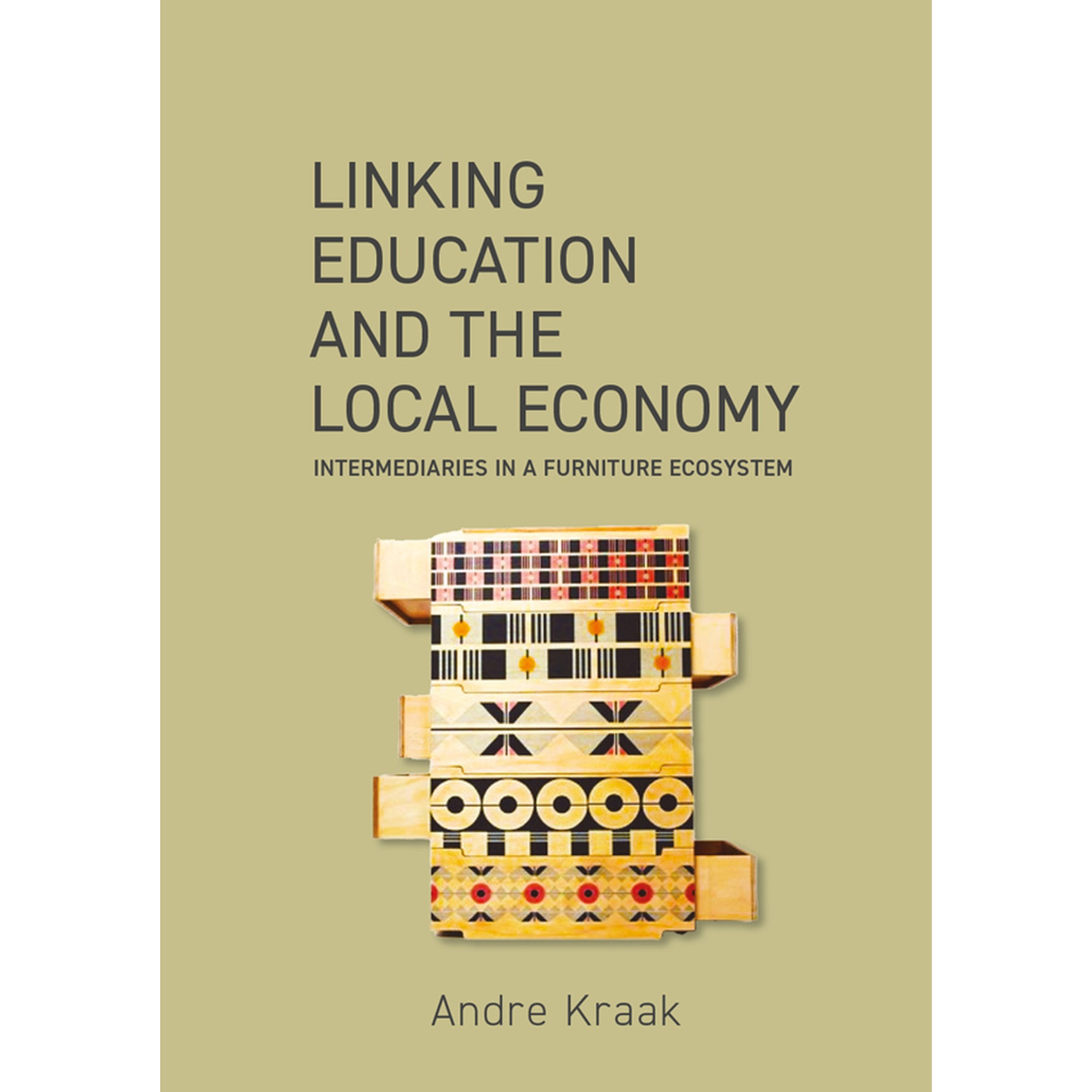
 Linking Education and the Local Economy: Intermediaries in a Furniture Ecosystem
Author: Andre Kraak
Format: Paperback
Linking Education and the Local Economy examines the collapse of linkages between South Africa’s post-school education and training system and the declining furniture industry. Using a case study approach, it explores reasons behind the erosion of the sector’s competitiveness. The book shows how intermediaries – organisations or individuals bridging gaps between fi rms, education providers and government – could revitalise the industry by fostering collaboration, knowledge exchange and innovation.
The book contends that South Africa’s furniture industry, once thriving, has suffered due to global competition, neoliberal policies and employer disengagement from public education systems which are viewed as outdated and bureaucratic. The absence of intermediaries exacerbates these challenges, leaving fi rms isolated and innovation stagnant.
While the literature highlights intermediaries as key to strengthening innovation ecosystems, South Africa’s ‘ruggedly individualistic’ business culture and state inefficiencies hinder their effectiveness. The book proposes that structured intermediation – ranging from basic networking to advanced systemic coordination – could rebuild these linkages.
Most innovation research focuses on high-tech sectors and radical innovation; this book shifts attention to traditional industries reliant on incremental innovation and tacit knowledge. It proposes a novel framework of intermediation, offering a roadmap for policymakers. Any such roadmap requires sectoral differentiation, rejecting one-size-fits-all policies.
In addition, there is a need for state capability-building (enhancing public-sector intermediation skills), firm engagement (encouraging large fi rms to share knowledge and small fi rms to embrace collective learning), and reforming intermediaries (shifting from bureaucratic compliance to dynamic, network-driven roles).
The insights provided by Linking Education and the Local Economy is of interest to academics and researchers, particularly those in innovation studies, industrial policy, vocational education, and development economics; policymakers, notably government officials drafting industrial and skills development strategies and policies; and industry stakeholders, including business associations, education providers, and intermediaries seeking practical solutions for sectoral renewal.
Intermediation, though underutilised in South Africa, holds promise for reconnecting education systems with industry. The empirical and theoretical insights set out in this book offer a blueprint for revitalising not only furniture but other traditional sectors facing similar crises.
For custom orders and quotes: shop@schoolspace.co.za
© 2026 Schoolspace. This product description is the exclusive intellectual property of the publisher, protected under copyright law. Unauthorized use, adaption, or copying is strictly prohibited.