

Product Description
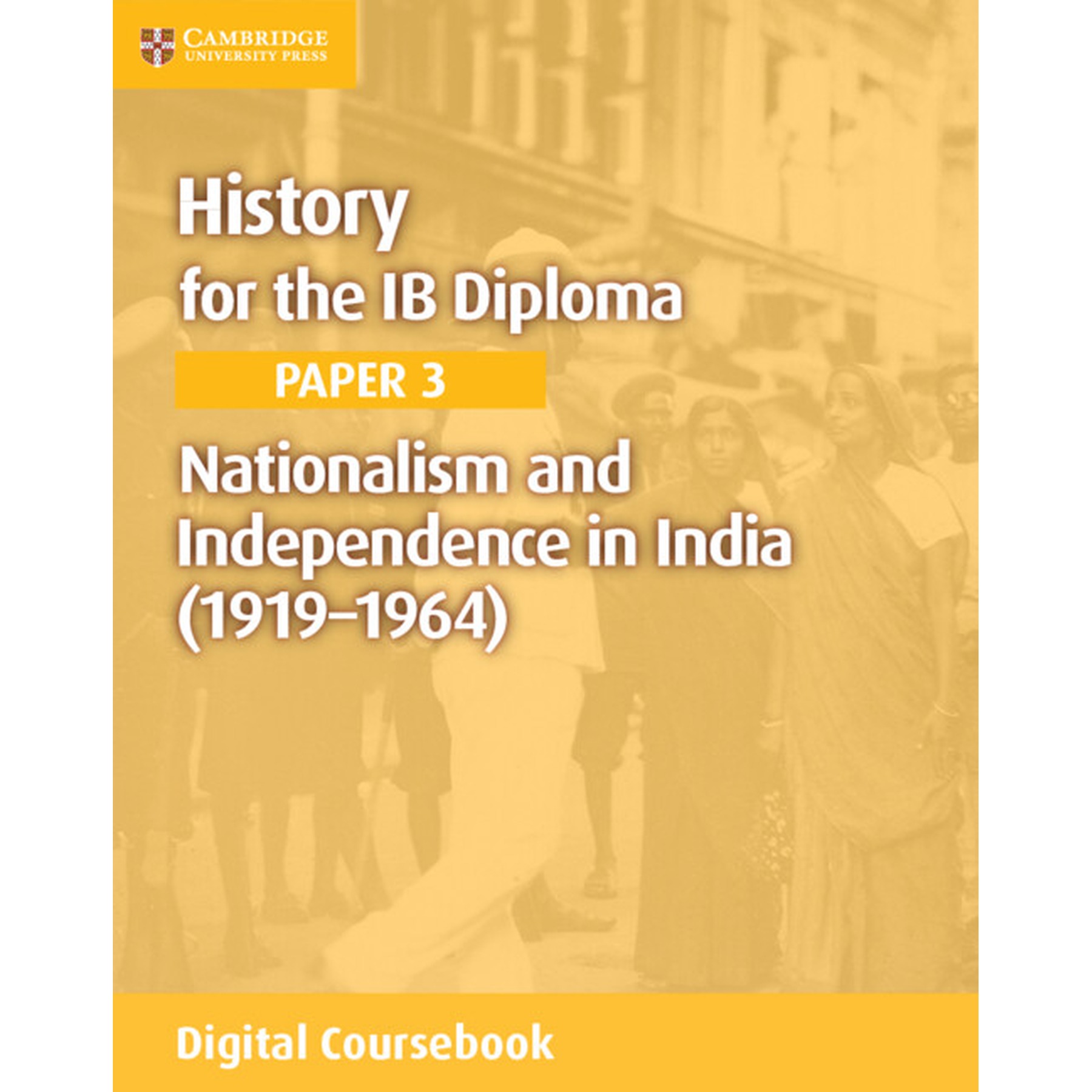
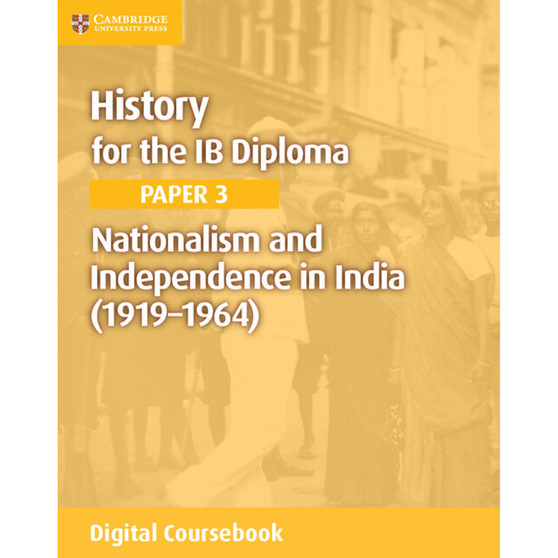
 History for the IB Diploma Paper 3: Nationalism and Independence in India (1919–1964) Digital Coursebook (2 years)
Format: Digital
This History for the IB Diploma Paper 3 Nationalism and Independence in India coursebook Cambridge Elevate edition covers Paper 3, HL option 3: History of Asia and Oceania, Topic 10: Nationalism and Independence in India (1919-1964) of the History for the International Baccalaureate (IB) Diploma syllabus for first assessment in 2017. Tailored to the requirements of the IB syllabus, and written by an experienced examiner and teacher it offers an authoritative and engaging guidance through nationalism in India, from the end of World War I to the achievement of Indian independence and the development of the country.
This History for the IB Diploma Paper 3 coursebook Cambridge Elevate edition offers activities throughout the chapters to encourage an exploratory and inquiring approach to historical learning, a wide range of primary and secondary sources to inspire engagement with multiple historical perspectives and interpretations, and develop students’ analytical skills. It also offers links to Theory of Knowledge to stimulate reflective discussion and Paper 3 exam-style questions to help improve student performance and provide preparation for assessment.
 Features:
- Authoritative and comprehensive text, written by experienced IB History examiners, covering one topic per title, to help students adopt an investigative and thorough approach to their study.
- Activities throughout the chapters to encourage an exploratory and inquiring approach to historical learning.
- A wide range of primary and secondary sources to develop students’ analytical skills.
- Opportunities for balanced historical debate to inspire engagement with multiple historical perspectives and interpretations.
- Links to Theory of Knowledge concepts to stimulate reflective discussion.
- Key Concept links to highlight how the 6 new key concepts can be integrated into the course.
- Paper 3 exam-style questions to help improve student performance and provide preparation for assessment.
 Contents:
- 1. Introduction
- Chapter 2. The origins of Indian nationalism and the impact of the First World War:
- 2.1. What were the origins of the nationalist movement in India?
- 2.2. How did the First World War affect India?
- 2.3. To what extent did the demands for Home Rule boost the nationalist movement?
- Chapter 3. Political developments between 1919 and 1935:
- 3.1. To what extent was the Amritsar Massacre a turning point?
- 3.2. How did the Government of India Act (1919) affect India?
- 3.3. What was the significance of the Simon Commission?
- 3.4. How effective were the Round Table Conferences?
- 3.5. What were the responses to the Government of India Act, 1935?
- Chapter 4. The role and importance of key groups and individuals: 4.1. What role did the Indian National Congress play in the nationalist movement?
- 4.2. How important was the All-India Muslim League in the nationalist movement?
- 4.3. Why was Gandhi so important to the nationalist movement?
- 4.4. What was Nehru's contribution to the nationalist movement?
- 4.5. How significant was Jinnah's role in the nationalist movement?
- Chapter 5. The struggle for independence:
- 5.1. What was the Non-Cooperation movement?
- 5.2. Why was the Salt March so significant?
- 5.3. What happened during further Civil Disobedience campaigns?
- 5.4. Why was the 'Quit India' campaign significant?
- Chapter 6. The growth of Muslim separatism:
- 6.1. What was the background to the growth of Muslim separatism?
- 6.2. When and how did the 'Two Nation' theory develop?
- 6.3. How significant was the Lahore Resolution?
- Chapter 7. The impact of the Second World War:
- 7.1. How did the Second World War affect India?
- 7.2. What role did Subhas Chandra Bose play?
- 7.3. Why did the Cripps Mission fail?
- 7.4. How did the war affect British power in India?
- 7.5. What was the situation in India after the war?
- Chapter 8. Independence and partition:
- 8.1. What role did Mountbatten play?
- 8.2. How did India achieve independence?
- 8.3. What were the reasons for the partition of the South Asian subcontinent?
- Chapter 9. Post-independence India:
- 9.1. What ethnic and religious conflicts did India face?
- 9.2. How were the princely states incorporated?
- 9.3. Why was there conflict with Pakistan over Kashmir?
- 9.4. To what extent were Nehru's domestic policies successful?
- Chapter 10. Exam practice
- Further Reading
- Index.
For custom orders and quotes: shop@schoolspace.co.za
© 2026 Schoolspace. This product description is the exclusive intellectual property of the publisher, protected under copyright law. Unauthorized use, adaption, or copying is strictly prohibited.