

Product Description
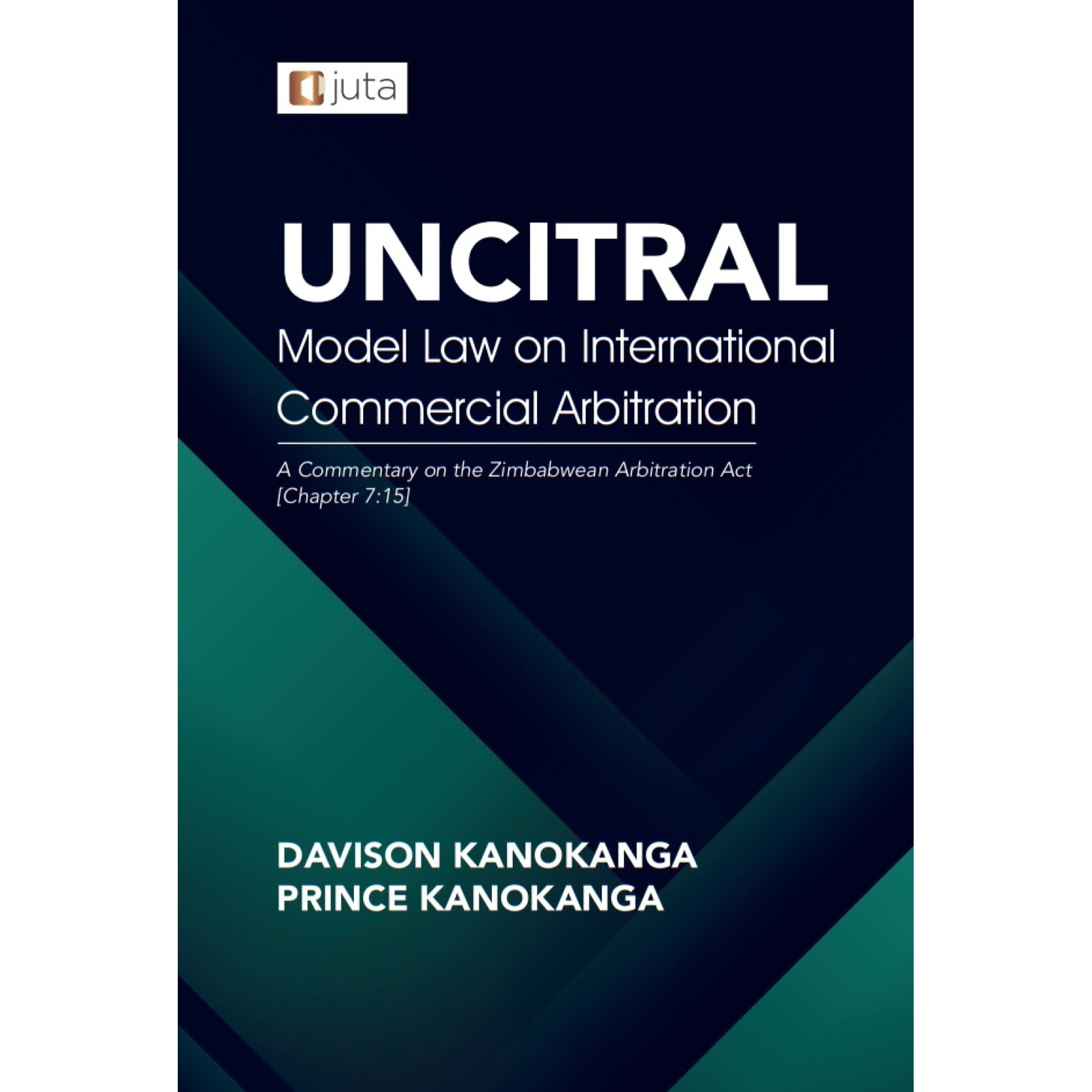
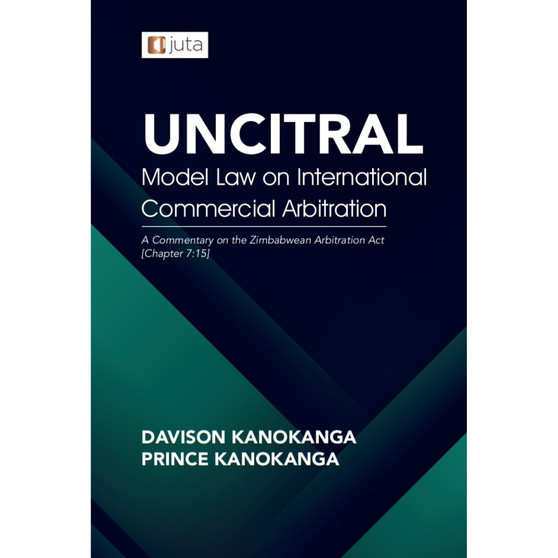
 UNCITRAL Model Law on International Commercial Arbitration (eBook)
Authors: D Kanokanga, P Kanokanga
Format: Digital
There are several published international textbooks and cases books on international commercial arbitration UNCITRAL Model Law on International Commercial Arbitration: A Commentary on the Zimbabwean Arbitration Act [Chapter 7:15] provides a comprehensive commentary on the Model Law on International Commercial Arbitration adopted by the United Nations Commission on International Trade Law (UNCITRAL) on the 21st June, 1985.
The commentary is based on the Arbitration Act [Chapter 7:15] which gave effect to the Model Law on International Commercial Arbitration in Zimbabwe. Within the continent, among a dozen of countries, Zimbabwe was the fifth country to adopt the Model Law after Nigeria (1990), Tunisia (1993), Egypt (1994) and Kenya (1995). It has adopted the Model law in its entirety, with some modifications to the text of the Model Law but has kept the essence of the Model Law in its original.
Father and son, Davison and Prince Kanokanga, both of whom are leading academics and arbitration practitioners, address fundamental questions in the commentary, as they both combine theory and practice. This is illustrated in each chapter of the book which covers specific but salient aspects of international commercial arbitration.
The introductory chapter reflects on the history and development of arbitration in Zimbabwe and the work conducted by the Law Development Commission of Zimbabwe (LDCZ) which was chaired by Chief Justice AR Gubbay, who was assisted by persons who include Mr AR McMillan, Mr PA Chinamasa, Mr Y Omerjee, Mr BC Brown, Mrs B Chanetsa, Professor W Ncube, Professor G Feltoe, Mr H Kantor, Mr Justice Robison and Mr T Uchena. The LDCZ’s was also assisted by Adv A de Bourbon, Mr I Donovan, Mr MA Masunda and Mr B Patel.
The adoptions and modifications to the Model Law in Zimbabwe were to a large extent based on responses from leading figures such as Mr Justice FC Blackie, Mr Justice N Kaplan, Mr EA Schwartz, Professor RC Christie, DC Oryden, T Kennedy-Grant, L William, GW Longley, A Queuten-Baxter and ML Walsh.
UNCITRAL Model Law on International Commercial Arbitration: A Commentary on the Zimbabwean Arbitration Act [Chapter 7:15] begins each chapter with a reference to the travaux preparatories – which include the original drafts, reports, summary record of the debates, government comments and other documents. All the chapters on the Model law follow a similar structure, which is based on a paragraph-by-paragraph analysis of the provisions of the Model law.
The discussion under each chapter in the commentary presents not only the Zimbabwean cases on arbitration, but also embodies the leading Case Law on UNCITRAL Texts (CLOUT) developed by the courts in other Model law jurisdictions and the works of eminent international scholars to help the reader develop a deeper understanding on each provision of the Model law.
This book is designed for anyone who wants to have a deeper knowledge of international commercial arbitration. It is an essential reader friendly commentary for accountants, advocates, auditors, arbitrators, business people, engineers, in-house counsel, law students, lawyers, law reformers (academic and judicial), judges and other professional persons who are involved in international commercial arbitration.
 Contents:
-
Introduction
-
Article 1: Scope of application
-
Article 2: Definitions and rules of interpretation
-
Article 3: Receipt of written communications
-
Article 4: Waiver of right to object
-
Article 5: Extent of court intervention
-
Article 6: Court or other authority for certain function of arbitration assistance & supervision
-
Article 7: Definition and form of arbitration agreement
-
Article 8: Substantive claim before court
-
Article 9: Arbitration agreement & interim measures by court
-
Article 10: Number of arbitrators
-
Article 11: Appointment of arbitrators
-
Article 12: Grounds for challenge
-
Article 13: Challenge procedure
-
Article 14: Failure or impossibility to act
-
Article 15: Appointment of substitute arbitrator
-
Article 16: Competence of arbitral tribunal to rule on its own jurisdiction
-
Article 17: Power of arbitral tribunal to order interim measures
-
Article 18: Equal treatment of parties
-
Article 19: Determination of rules of procedure
-
Article 20: Place of arbitration
-
Article 21: Commencement of arbitral proceedings
-
Article 22: Language
-
Article 23: Statements of claim and defence
-
Article 24: Hearings and written proceedings
-
Article 25: Default of a party
-
Article 26: Expert appointed by arbitral tribunal
-
Article 27: Court assistance in taking evidence
-
Article 28: Rules applicable to substance of dispute
-
Article 29: Decision-making by panel of arbitrators
-
Article 30: Settlement
-
Article 31: Form and contents of award
-
Article 32: Termination of proceedings
-
Article 33: Correction and interpretation of award
-
Article 34: Application for setting aside as exclusive against arbitral award
-
Article 35: Recognition and enforcement
-
Article 36: Grounds for refusing recognition or enforcement
For custom orders and quotes: shop@schoolspace.co.za
© 2026 Schoolspace. This product description is the exclusive intellectual property of the publisher, protected under copyright law. Unauthorized use, adaption, or copying is strictly prohibited.