

Product Description
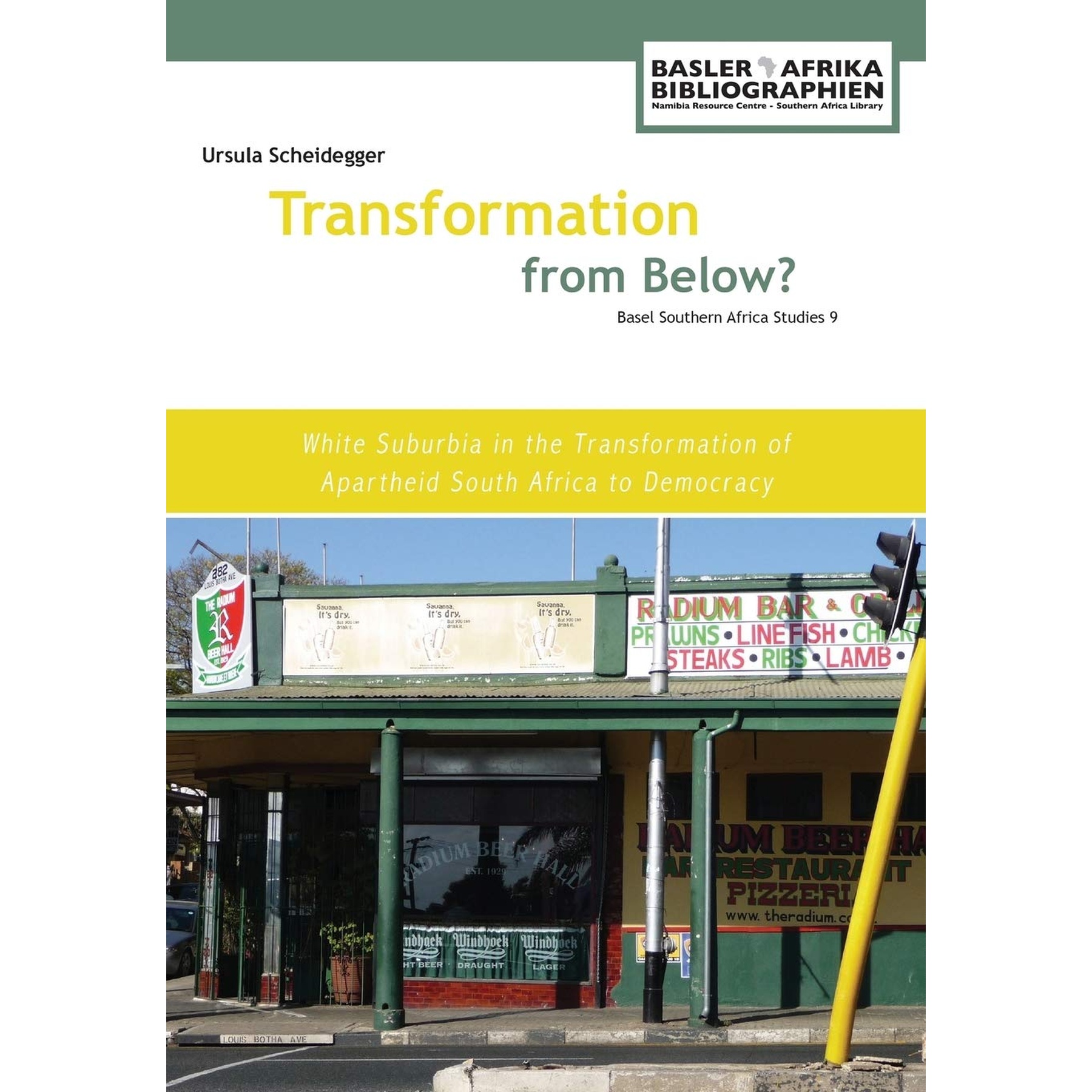
 Transformation from Below?: White Suburbia in the Transformation of Apartheid South Africa to Democracy
Author: Ursula Scheidegger
Format: Paperback
South Africa is an example of a relatively successful political transition. Nevertheless, the first democratic elections in 1994 did not change the systemic and structural inequalities, the socio-economic legacies of discrimination or the alienation of the different population groups.
At the centre of this study is the transformation potential of two formerly white neighbourhoods in Johannesburg – Norwood and Orange Grove. Both neighbourhoods have experienced considerable demographic changes and the various population groups differ in terms of their expectations and their willingness to adjust to the changes provoked by the transition.
At the local level, patterns of discrimination and oppression continue. Spaces, opportunities and leverage of social networks engaged in the community are influenced by the resources people are able to access.
Moreover, cooperation is contested in a context of pervasive inequality because there is no incentive for privileged groups to change arrangements that benefit them. In this context of conflicting interests and unequal access to power and resources, decentralisation and the promotion of participatory structures in local communities are a problem and the reliance on local networks as agents of development is questionable.
For custom orders and quotes: shop@schoolspace.co.za
© 2026 Schoolspace. This product description is the exclusive intellectual property of the publisher, protected under copyright law. Unauthorized use, adaption, or copying is strictly prohibited.