

Product Description
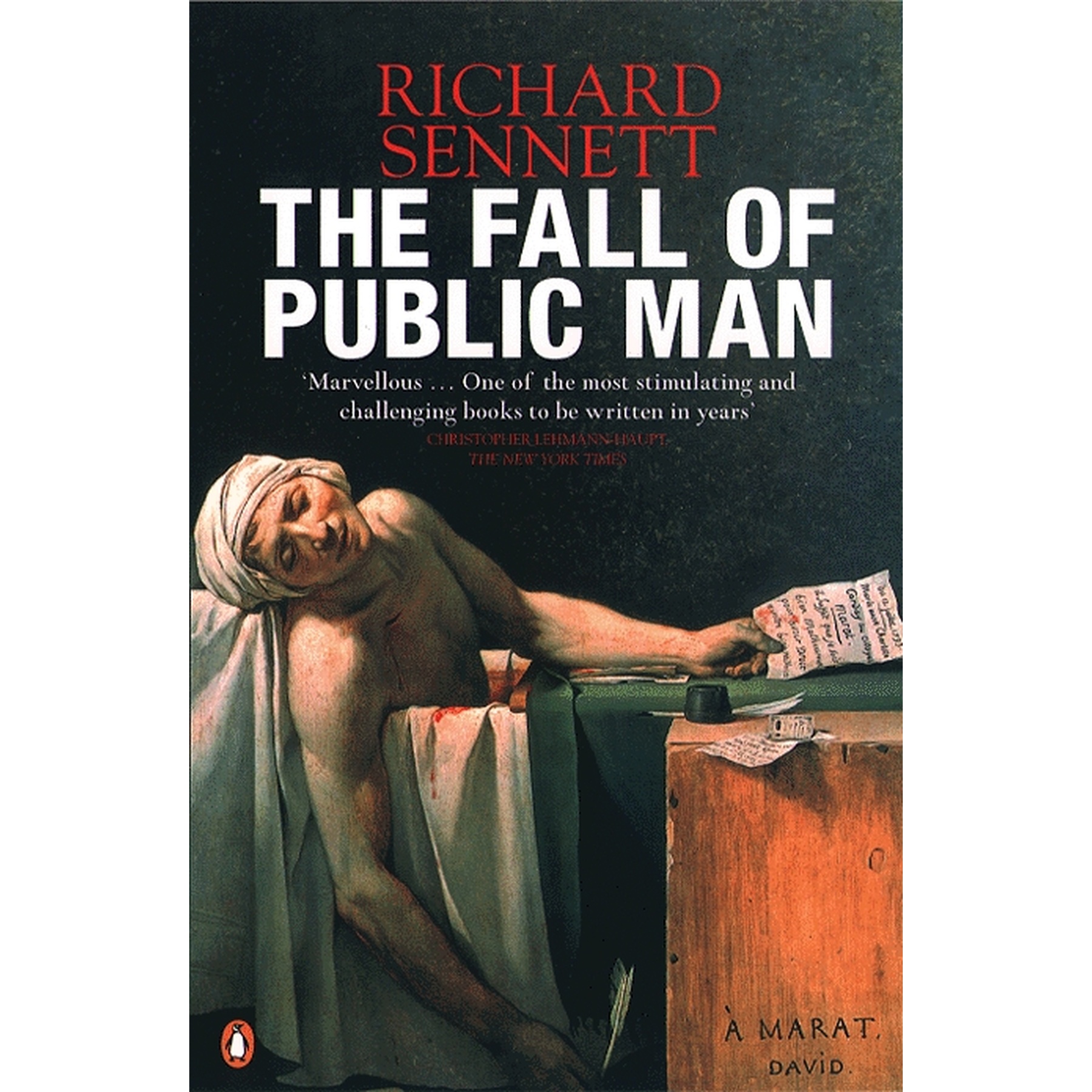
 The Fall of Public Man
Author: Richard Sennett
Format: Paperback
Richard Sennett's The Fall of Public Man examines the growing imbalance between private and public experience, and asks what can bring us to reconnect with our communities.
Are we now so self-absorbed that we take little interest in the world beyond our own lives? Or has public life left no place for individuals to participate?
Tracing the changing nature of urban society from the eighteenth century to the world we now live in, and the decline of involvement in political life in recent decades, Richard Sennett discusses the causes of our social withdrawal. His landmark study of the imbalance of modern civilization provides a fascinating perspective on the relationship between public life and the cult of the individual.
'Brilliant ... One admires the breadth of Professor Sennett's erudition, the reach of his historical imagination, the doggedness of his analysis ... Buy this book and read it. Ironically, it may provide a key to happiness' — The New York Times
About the Author
Richard Sennett grew up in the Cabrini Green housing project in Chicago, attended the Julliard School in New York and then studied social relations at Harvard. Over the last five decades, he has written about social life in cities, changes in labour and social theory. His books include The Hidden Injuries of Class, The Fall of Public Man, The Corrosion of Character, The Culture of the New Capitalism, The Craftsman and Building and Dwelling. Sennett has advised the United Nations on urban issues for the past thirty years and currently serves as member of the UN Committee on Urban Initiatives. He is Visiting Professor of Urban Studies at Harvard. Among other awards, he has received the Hegel Prize, the Spinoza Prize and the Centennial Medal from Harvard University.
For custom orders and quotes: shop@schoolspace.co.za
© 2026 Schoolspace. This product description is the exclusive intellectual property of the publisher, protected under copyright law. Unauthorized use, adaption, or copying is strictly prohibited.