

Product Description
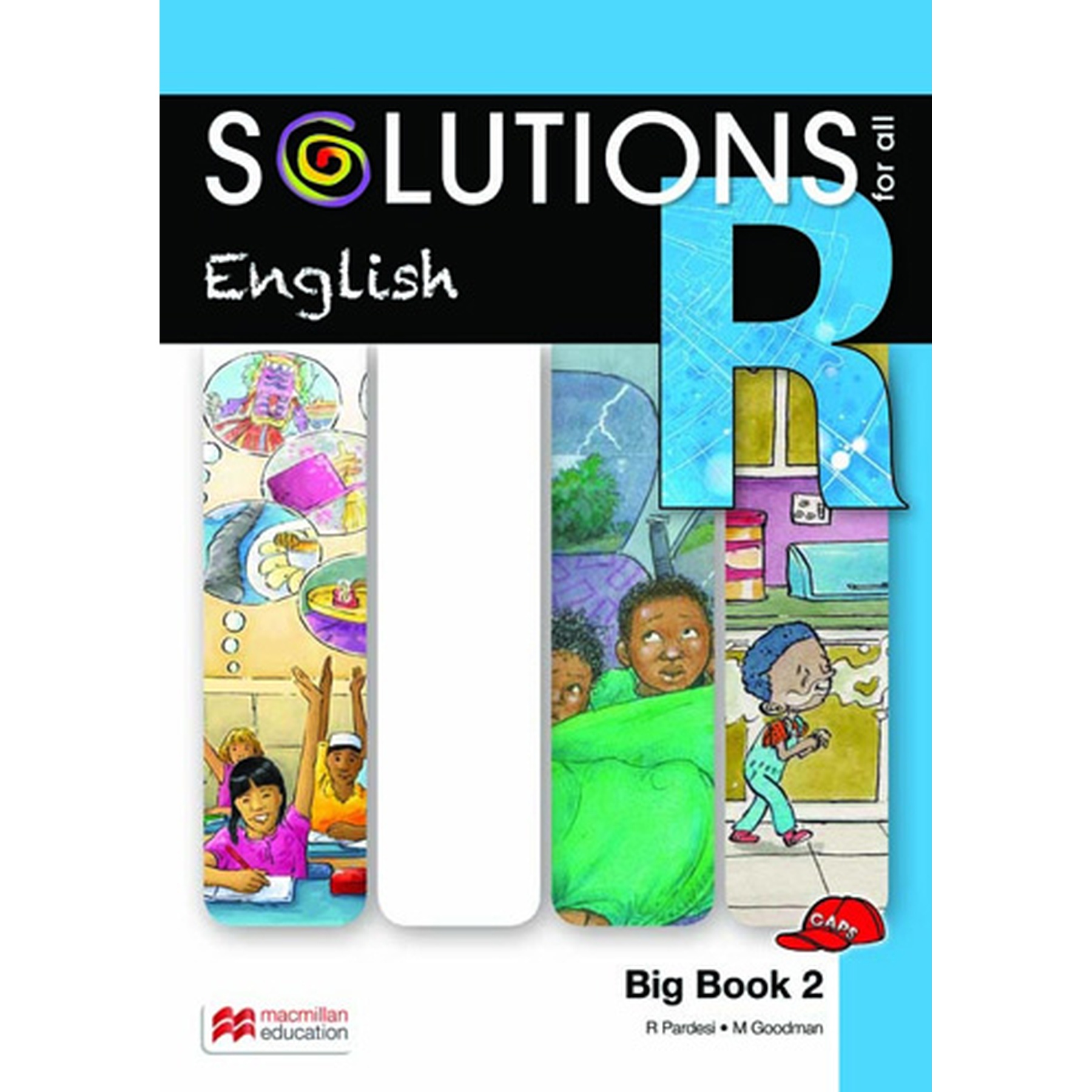
 Solutions for All English Grade R Big Book 2
Format: Physical Hardcopy
Emergent reading – ensure that the learner: holds the book the right way up turns pages correctly when ‘reading’ develops correct eye movement, such as following lines of text from left to right. Shared reading Learners ‘read’ the Big Book as a whole class with the teacher.
Choose a story to read with the learners. Before reading the story, ask a few questions.
For example, show learners the picture on the cover of the Big Book or one of the pictures in the story and talk about it. They should say what they think the story will be about. (Covers for each story can be found on the inside front cover of the Big Book .) Read the story through once, then read it again.
Let the learners join in any refrain. Use one or more of the following activities to check whether learners understand the story.
They can: join in the chorus answer a few simple questions describe and discuss characters draw a picture, capturing the main ideas of the story retell the story say whether they liked the story say how the story made them feel sequence pictures from the story respond through mime, movement and other drama activities. For optimum classroom use, purchase one set of Big Books per classroom.
Using the Anthology of stories There are 40 stories and each story is linked to a theme. Each story is accompanied by a colour picture or photograph.
There are suggestions for activities before, during and after reading for each story. Stories are told during the morning ring (to introduce a theme), during the introduction of a phonic sound, and during outdoor play through action word association.
They are also told to relax the learners before they depart for home. Ensure that you are thoroughly prepared by collecting all visual aids in advance and reading the story before you present it to the class.
Explore the meaning of any new or unfamiliar words with the class before reading the story. You can make flash cards with these words to use for this purpose.
Pre-reading If you are re-reading a story, ask the learners to recall what happens in the story. If you are reading a new book, ask the learners to make predictions: What do they see in the pictures?
What do they think the story/book is about? What do they think will happen in the story/book?
During reading Pause occasionally to check learners’ comprehension and to let the ideas sink in. Let learners sing the songs and say the predictable/repeated refrains.
Post-reading Help the learners to draw conclusions about what they have read through questions, discussions and activities. Make story time an enjoyable experience ‒ choose stories and books that you know will engage your learners, read different kinds of books and/or stories, and re-read favourite ones.
For optimum classroom use, purchase one per classroom.
For custom orders and quotes: shop@schoolspace.co.za
© 2026 Schoolspace. This product description is the exclusive intellectual property of the publisher, protected under copyright law. Unauthorized use, adaption, or copying is strictly prohibited.