

Product Description
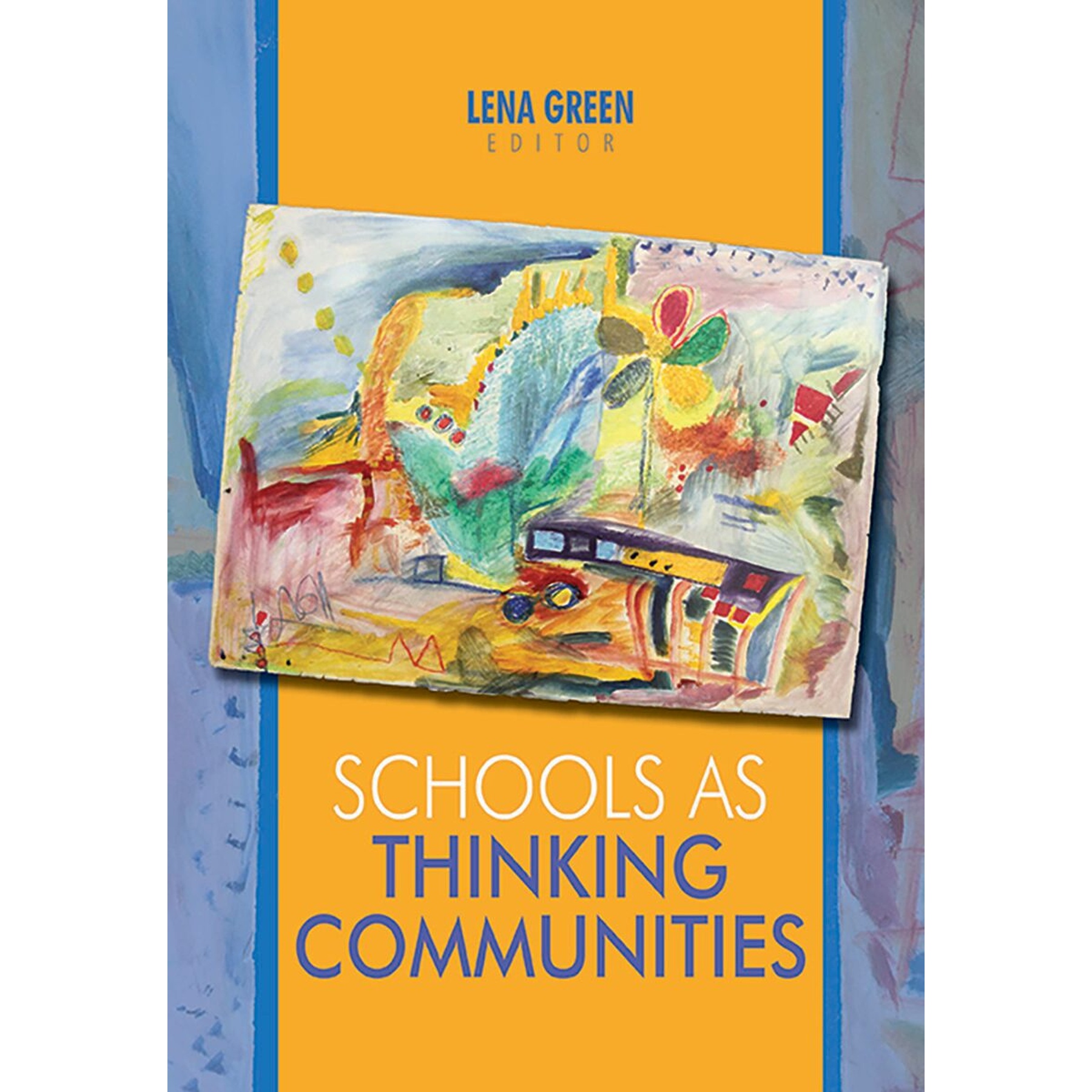
 Schools as Thinking Communities
Author: L Green
Format: Physical Hardcopy
Critical and creative thinking can make a significant difference to the quality of students' learning. But do we really need to teach children and young people to think, and if so, how should we go about it? The answer to the first part of the question is yes, because the fact of the matter is that although all human beings can think, highly effective thinking depends on skills and strategies that can be learned.
The answer to the second part lies within this book. Schools as Thinking Communities demystifies thinking and explains how teachers can equip students with the mental tools for success in school and beyond.
Schools as Thinking Communities provides detailed descriptions, illustrated with classroom examples, of the following ways of enhancing thinking: Habits of Mind; CoRT (Cognitive Research Trust) and Six Thinking Hats; P4C (Philosophy for Children); CEA (Cognitive Enrichment Advantage); Thinking Maps; IE (Instrumental Enrichment); TASC (Teaching Actively in a Social Context); and Cooperative Learning.
One or more of these might be chosen by a school community as a means to nurture thinking across the curriculum in every classroom, thus encouraging individuals to understand, manage and take responsibility for their own thinking processes, and to value the perspectives of others.
Contents also include the following:
Schools as Thinking Communities is aimed at teachers at all levels, curriculum designers, education planners, teacher educators and interested parents.
 Features:
-
How students and teachers develop as thinkers
-
The characteristics of a thinking classroom
-
The process of developing a school as a thinking community
-
Life skills and inclusion in a thinking community
-
Challenges to the development of thinking communities
 Contents:
-
PART I Essential elements of a thinking community
-
Chapter 1 Introduction: why thinking communities?
-
Chapter 2 Thinking students: how children and adolescents develop as thinkers
-
Chapter 3 Thinking teachers: how teachers continue to develop as thinkers
-
Chapter 4 Thinking classrooms: how to recognise a thinking classroom
-
Chapter 5 Thinking schools: how schools develop as thinking communities
-
PART II Ways of mediating and enhancing thinking in schools
-
Chapter 6 Habits of mind
-
Chapter 7 The CoRT programme and Six Thinking Hats
-
Chapter 8 Philosophy for Children (P4C)
-
Chapter 9 Cognitive Enrichment Advantage (CEA)
-
Chapter 10 Thinking Maps
-
Chapter 11 Instrumental Enrichment (IE)
-
Chapter 12 Thinking Actively in a Social Context (TASC)
-
Chapter 13 Cooperative learning
-
PART III Making connections
-
Chapter 14 Life skills education in a thinking community
-
Chapter 15 Inclusive education in a thinking community
-
Chapter 16 Working towards thinking communities in South African schools
For custom orders and quotes: shop@schoolspace.co.za
© 2026 Schoolspace. This product description is the exclusive intellectual property of the publisher, protected under copyright law. Unauthorized use, adaption, or copying is strictly prohibited.