

Product Description
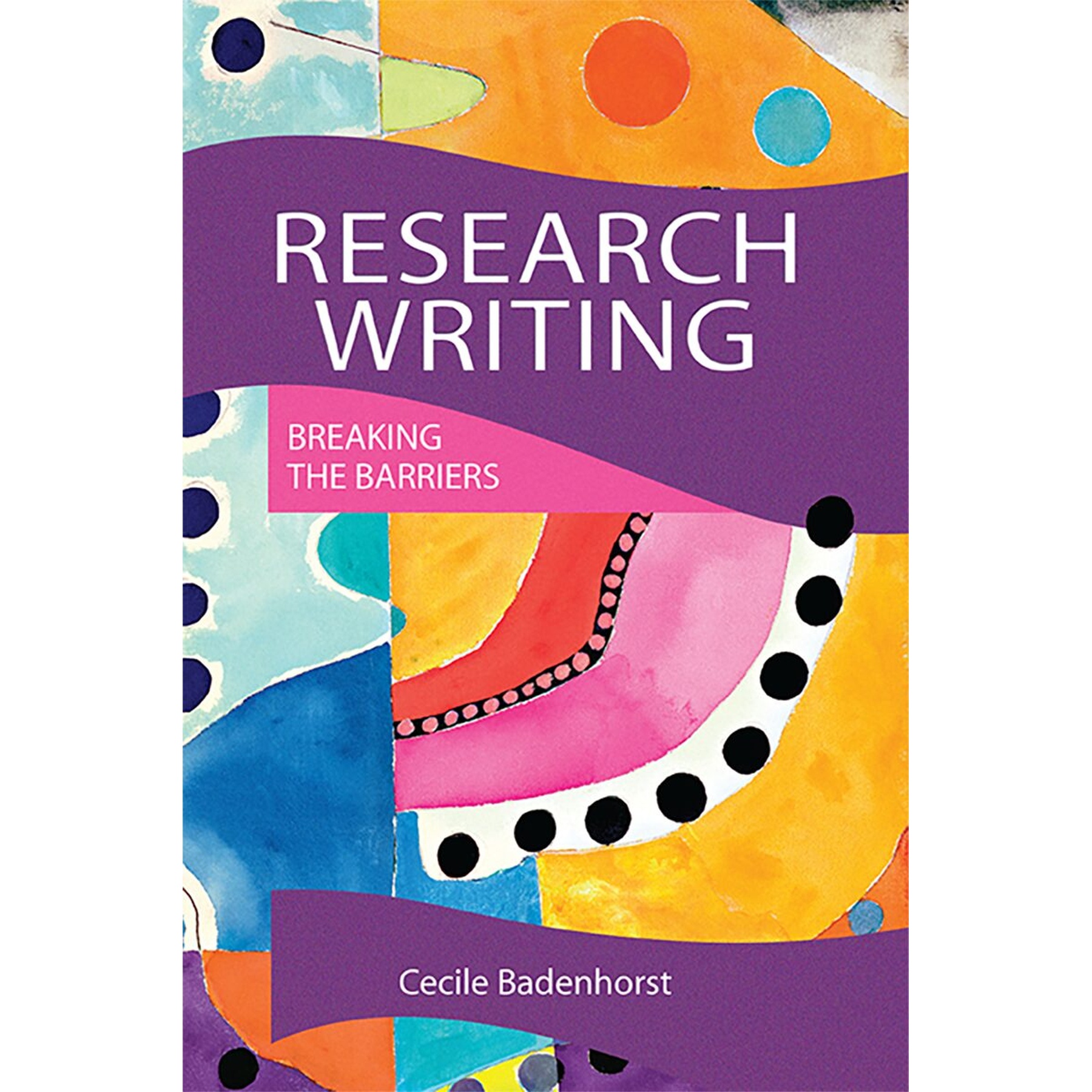
 Research Writing – Breaking the Barriers
Author: C Badenhorst
Format: Physical Hardcopy
Research Writing: breaking the barriers is a book for those who regularly write documents based on research. If you find your writing is stale and you are unable to improve it, or you are trying to understand why you cannot finish a paper, or perhaps you are feeling jaded and disillusioned with the environment of "publish or perish" and would like to gain a sense of control, enjoyment and inspiration from doing research and publishing, then this book is for you.
While it is conceptualised around qualitative research writing in an academic context, the book focuses on generating quality ideas, demystifying the writing process and breaking the barriers of real and imagined writing restrictions. Any researcher can benefit from this creative adventure.
The book links theory and practice through sets of practical activities. Each of these is designed to take you through the entire process of writing a research paper. Activities for postgraduate dissertation writers are also included. Topics covered include writing in an academic discourse, developing a writer's identity, finding time to write, conceptualising research, creativity and research, and writing with energy and style.
 Contents:
-
PART I: COMPOSING 1. A writing identity 2. The cyborg writer 3. The academic way 4. Academic discourse 5. Research and “truth” 6. The nature of the academy 7. The academic hierarchy 8. Research paper specifics 9. Conceptualising research 10. The problem statement 11. Conceptual framework 12. The purpose statement 13. Research questions 14. Relating the problem/purpose statements to the research paper 15. Beginning a research article 16. Academic writing 17. Genre 18. The genre of a research article 19. The genre of argument 20. The genre of literature reviews 21. Referencing 22. Why is writing difficult? 23. Making writing easier 24. Writing and creativity 25. Thinking about creativity 26. “Eyes” of creativity 27. Understanding creativity 28. Theories about writing 29. Stages of writing 30. The creative brain 31. Left-brain dominance 32. Vertical vs lateral thinking 33. Pulling this all together 34. Creative techniques 35. Organic mapping and brainstorming 36. Free-writing 37. Chaos/order 38. Linking writing to theories of creativity 39. The researcher’s journal 40. Writing demons 41. Writing strategies 42. Writing to inquire 43. “Voice” 44. Writing groups 45. Research narrative 46. Sequencing 47. “Bare bones” 48. Key message 49. Pushing the boundaries 1 50. Pushing the boundaries 2 51. Pushing the boundaries 3 52. Pushing the boundaries 4 53. Pushing the boundaries: summing up 54. The importance of drafts 55. What’s in draft 1?
-
PART II: REVISING 56. Where you are now 57. Revision: getting started! 58. Writing as thinking 59. Building blocks 60. Thinking about structure 61. A basic structure 62. Different types of structures 63. Using organic maps to develop structure 64. The complexities of structure 65. Is your argument clear? 66. Coherence 67. Representation 68. Audience vs reader 69. Time 70. How do we manage time to write research? 71. Revision 1 – re-vision 72. Revision 2 – an eye for crafting 73. Feedback 74. Peer review feedback 75. Beginnings and endings 76. Revision 3 – scrutiny 77. Transitions and coherence 78. Signposts 79. Writing with energy and style 80. Active vs passive verbs 81. Strong verbs 82. Words 83. Dense writing 84. Reviewing a research paper 85. Publishing from a dissertation 86. Revision 4 – a critical eye 87. Productive writers
About the Author
The author, Cecile Badenhorst (PhD), is a sessional lecturer and research fellow at the Graduate School of Public and Development Management at the University of the Witwatersrand. She teaches on the PhD programme and supports students in completing their research dissertations.
For custom orders and quotes: shop@schoolspace.co.za
© 2026 Schoolspace. This product description is the exclusive intellectual property of the publisher, protected under copyright law. Unauthorized use, adaption, or copying is strictly prohibited.