


Product Description
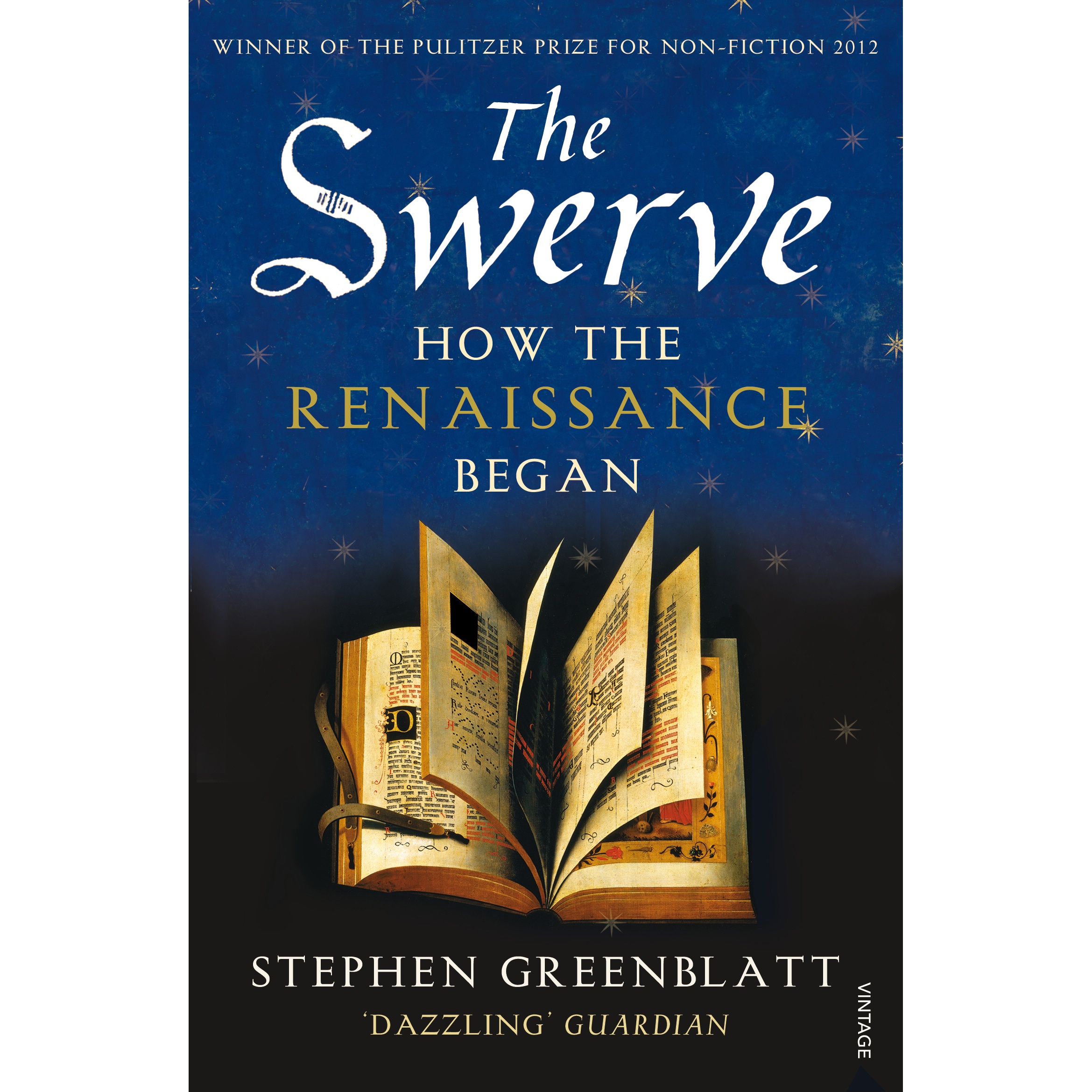
 The Swerve
Author: Stephen Greenblatt
Format: Paperback
How the Renaissance Began
A riveting, exemplary tale of the great cultural "swerve" known as the Renaissance.
Winner of the Pulitzer Prize for Non-Fiction 2012
Almost six hundred years ago, a short, genial man took a very old manuscript off a library shelf. With excitement, he saw what he had discovered and ordered it copied. The book was a miraculously surviving copy of an ancient Roman philosophical epic, On the Nature of Things by Lucretius and it changed the course of history.
He found a beautiful poem of the most dangerous ideas - that the universe functioned without the aid of gods, that religious fear was damaging to human life, and that matter was made up of very small particles in eternal motion. These ideas fuelled the Renaissance, inspiring Botticelli, shaping the thoughts of Montaigne, Darwin, and Einstein.
An innovative work of history by one of the world's most celebrated scholars and a thrilling story of discovery, The Swerve details how one manuscript, plucked from a thousand years of neglect, made possible the world as we know it.
'Superbly readable... An exciting story, and Greenblatt tells it with his customary clarity and verve' — Robert Douglas-Fairhurst, Daily Telegraph
About the Author
Stephen Greenblatt is Cogan University Professor of the Humanities at Harvard University.
He is the author of fifteen books, including The Swerve: How the World Became Modern, which won the National Book Award and a Pulitzer Prize, as well as the New York Times bestseller Will in the World: How Shakespeare Became Shakespeare and the classic university text Renaissance Self-Fashioning. A prize-winning author and celebrated scholar, he has been studying, thinking and writing about Renaissance literature for his entire working life.
For custom orders and quotes: shop@schoolspace.co.za
© 2026 Schoolspace. This product description is the exclusive intellectual property of the publisher, protected under copyright law. Unauthorized use, adaption, or copying is strictly prohibited.