

Product Description
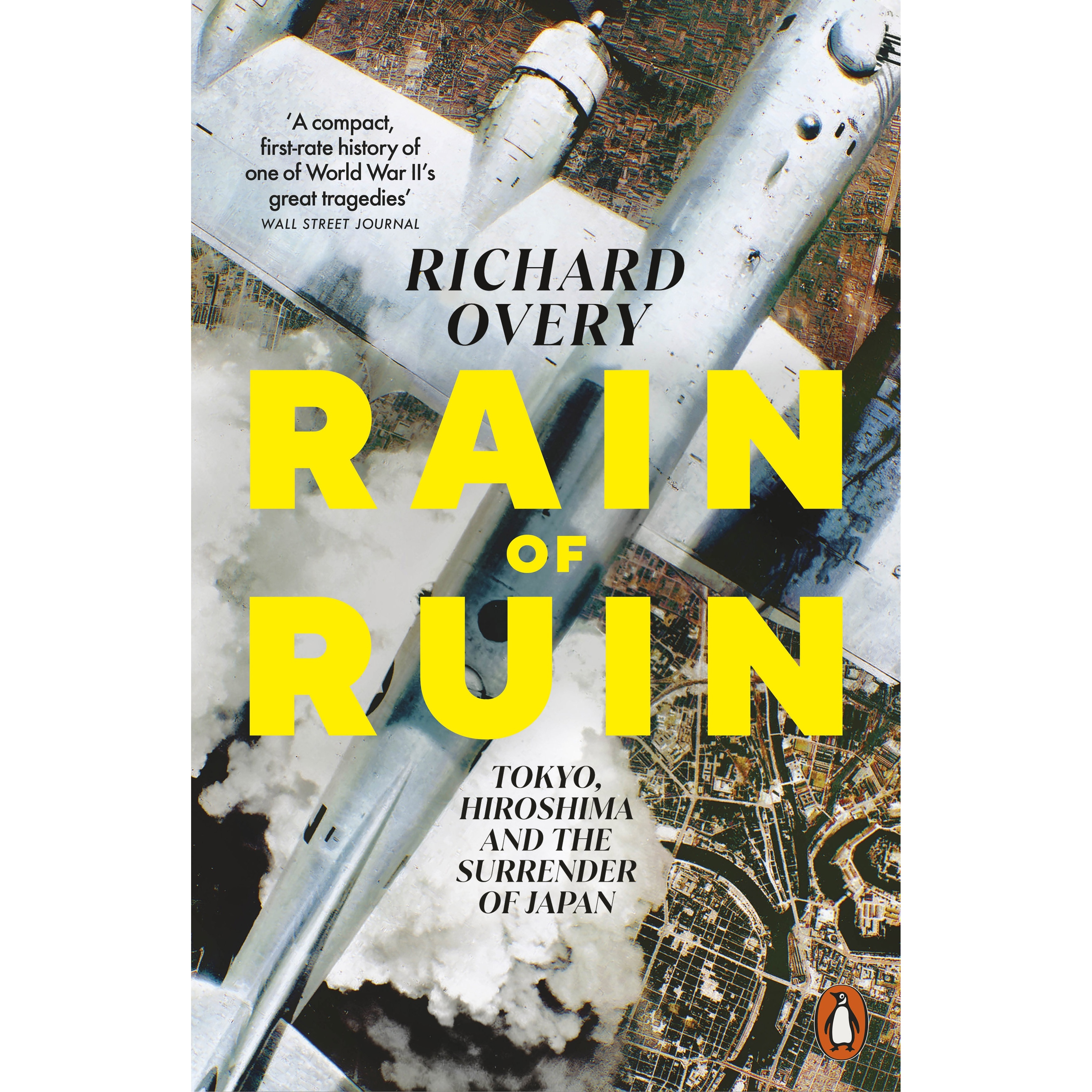
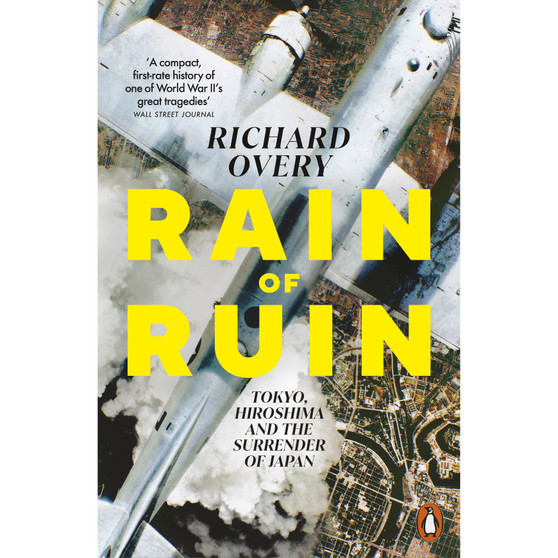
 Rain of Ruin
Author: Richard Overy
Format: Paperback
Tokyo, Hiroshima and the Surrender of Japan
A remarkable account of the terrible climax of the Second World War in Asia
A Telegraph Book of the Year 2025
'A short but quietly devastating book, in which Overy adds new perspectives to a subject that has often been approached from a narrowly American angle... Overy's book is a sombre reminder that the border between civilisation and savagery is wafer-thin.' — Philip Snow, Literary Review
In the closing months of the Second World War hundreds of thousands of Japanese, mostly civilians, died in a final outburst of violence from the air. American planes were beginning to run low on plausible targets when it was decided to use two atomic weapons in a final, terrible flourish to try to end the war.
Richard Overy's remarkable new book rethinks how we should regard this last stage of the war and the role of the bombing. This book explores the way in which the willingness to kill civilians and destroy cities became normalized in the course of a horrific war as moral concerns were blunted and scientists, airmen, and politicians followed a strategy of mass destruction they would never have endorsed before the war began. But it also engages with the new scholarship that shows how complex the effort to end the war was in Japan, where 'surrender' was entirely foreign to Japanese culture.
About the Author
Richard Overy is Honorary Research Professor of History at the University of Exeter and one of Britain's most distinguished historians. His major works include The Dictators, winner of the 2005 Wolfson Prize, The Morbid Age and The Bombing War, which won a Cundill Award for Historical Excellence in 2014. He is a Fellow of the British Academy and a Member of the European Academy of Sciences and Arts.
For custom orders and quotes: shop@schoolspace.co.za
© 2026 Schoolspace. This product description is the exclusive intellectual property of the publisher, protected under copyright law. Unauthorized use, adaption, or copying is strictly prohibited.